Unlock Secrets to Analyze Social Media Performance


Unlock Secrets to Analyze Social Media Performance
By Bluemoon Ads, Leading Digital Marketing in Lebanon | Bluemoon Creative Agency
Effective social media analysis depends on measuring key metrics that reveal audience engagement and content effectiveness. This guide explains the essential metrics for assessing social media success, their role in business strategy, and the tools that streamline performance analytics. Many organisations find it challenging to interpret data and turn it into growth actions; understanding these metrics enables campaign optimisation and measurable outcomes. It reviews core metrics and practical techniques to improve campaign results and inform strategic decisions.
Key Social Media Metrics
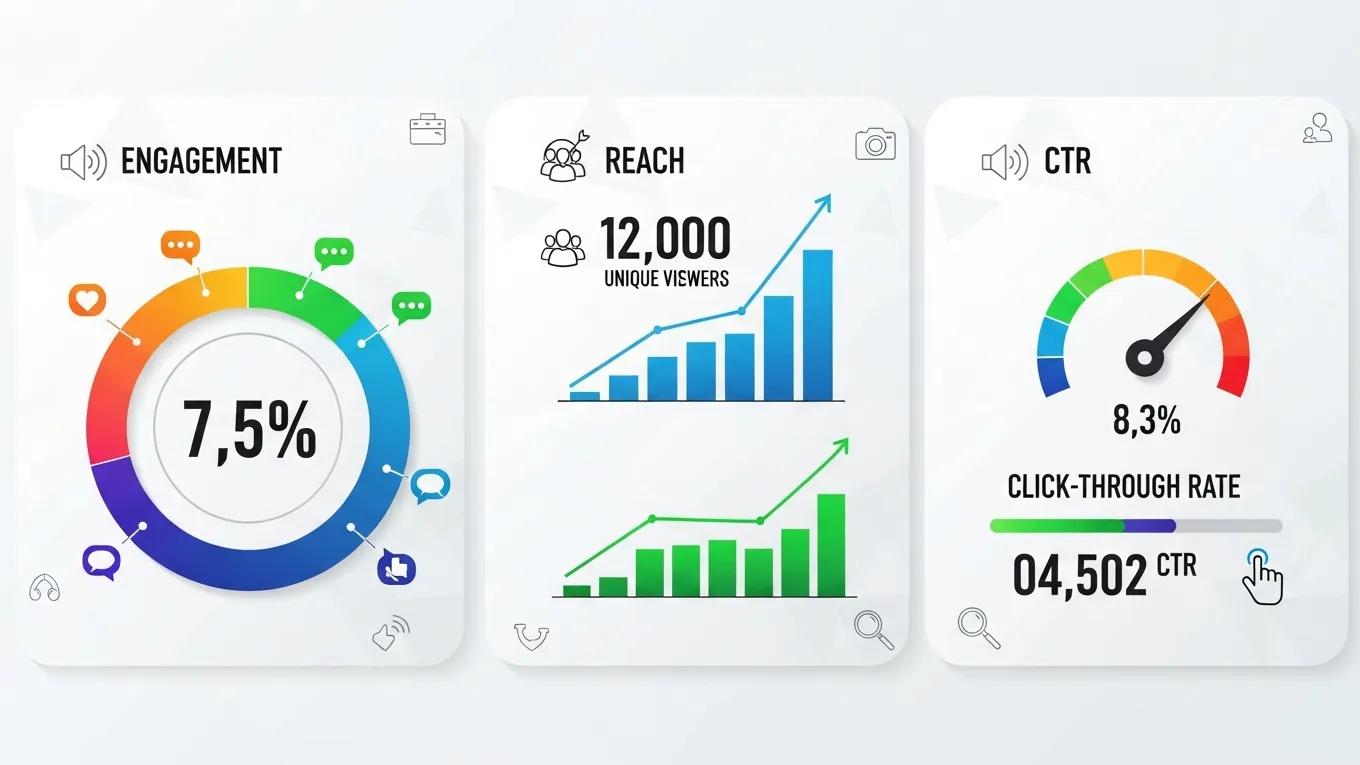
Key performance indicators (KPIs) form the foundation of social media analysis. They reveal engagement levels, audience reach, and overall impact. The primary metrics to monitor are engagement rate, reach, and click-through rate (CTR).
Engagement Rate
Engagement rate measures how audiences interact with your content. Higher engagement indicates relevance and perceived value, supporting loyalty and brand advocacy.
Reach
Reach counts the unique users who see a post. Greater reach improves brand visibility and helps attract potential followers.
Click-Through Rate (CTR)
Click-through rate (CTR) measures how often viewers take a desired action, such as visiting your website or subscribing. CTR shows how effectively content converts attention into measurable outcomes.
These metrics connect directly to broader business objectives and guide strategic decisions.
Significance of Metrics
Metrics guide content strategy, increase engagement, and expand visibility. Interpreting these measures allows businesses to adjust marketing efforts to better match target audiences and objectives. Social media marketing is essential for this process.
- Guiding Content Strategy: Metrics help identify what type of content resonates with your audience, guiding future content creation and curation.
- Understanding Engagement Levels: Engagement metrics reveal the effectiveness of your posts, allowing for targeted adjustments based on audience preferences.
- Increasing Visibility: Monitoring reach helps businesses understand how effectively they are expanding their audience base and enhancing brand awareness.
Together, these metrics create a clear view of social media performance and underscore the need for robust analytics.
Recommended Performance Analytics Tools

Selecting the right analytics tools is essential for accurate evaluation.
- Google Analytics: This tool tracks website traffic and user behavior, allowing you to correlate social media metrics directly with web performance.
- Sprout Social: Offers comprehensive reporting features, helping you analyze engagement and reach effectively.
- Hootsuite: This platform manages multi-platform analytics, making it easier to track performance across different social media channels.
Using these tools streamlines data collection and simplifies analysis.
Bluemoon Creative Agency provides social media analytics and reporting services that interpret performance metrics, identify growth opportunities, and optimise campaign impact for clients. For professional social media analytics and reporting services, Bluemoon Creative Agency can assist.
Optimizing Campaigns with Analytics
Analytics insights are key to optimising marketing campaigns. By analysing social media metrics, businesses can make data-driven decisions and strategic adjustments.
- Adjusting Content Based on Performance: Use metrics to refine content strategies, ensuring that future posts align with audience preferences.
- Understanding Website Behavior: By analyzing user paths and interactions, businesses can improve the visitor experience on their websites, increasing conversion rates.
- Refining Target Audiences: Insights derived from analytics allow for greater precision in audience targeting, ensuring that marketing messages reach the most relevant segments.
Optimising campaigns increases engagement and improves social media return on investment (ROI).
Emerging AI-Powered Tools
AI-powered tools are extending social media analytics capabilities, enabling deeper insights and more strategic decision-making.
- AI Tools for Predicting Trends: Emerging AI capabilities analyze historical data to forecast future trends, ensuring businesses are proactively adjusting their strategies.
- Automation for Reporting Efficiency: AI streamlines the reporting process, providing real-time insights without manual input, thus saving time and resources.
- Sentiment Analysis Tools: AI-driven sentiment analysis gauges audience reactions, helping brands understand public perception and adjust messaging accordingly.
Integrating AI into analytics helps businesses stay competitive and respond faster to market changes.
Best Practices for Using Social Media Analytics
Apply these best practices to improve the value of your analytics:
- Define Clear Marketing Objectives: Establishing specific goals will help guide your metrics selection and analytics approach.
- Choose Relevant KPIs: Selecting impactful metrics to track ensures that analytics efforts align with business objectives and yield meaningful insights.
- Regularly Review Performance Metrics: Consistent evaluations of metrics help adapt strategies in real time, fostering a responsive marketing environment.
These steps establish a reliable framework for using analytics to drive social media performance improvements.
Frequently Asked Questions
1. How can social media metrics influence my overall marketing strategy?
Social metrics indicate how audience behaviour aligns with your objectives. Examining engagement, reach, and CTR shows what resonates and guides content planning, helping future campaigns achieve higher engagement and conversions.
2. What are some common mistakes to avoid when analyzing social media performance?
Common mistakes include prioritising vanity metrics like likes without measuring conversions, failing to set clear objectives, and relying on a single platform’s data. Use cross-platform analysis and regularly reassess KPIs to keep insights relevant.
3. How often should I review my social media performance metrics?
Review metrics regularly—monthly or quarterly—to identify trends and adjust strategies. Conduct additional checks after campaigns or during seasonal periods to optimise future efforts.
4. Can small businesses benefit from using social media analytics?
Yes. Small businesses can use analytics to understand their audience, refine content strategies, and optimise ad spending. Even modest budgets can reveal effective tactics that boost visibility and customer loyalty.
5. What role does AI play in social media analytics?
AI improves analytics by automating data collection, forecasting trends, and accelerating reporting. Sentiment analysis helps assess public perception and supports more targeted messaging adjustments.
6. How do I choose the right social media analytics tool for my business?
Choose tools based on your objectives, the platforms you use, the metrics you need, and your budget. Prioritise comprehensive reporting, ease of use, and integration with other marketing systems. Google Analytics, Hootsuite, and Sprout Social offer varied features suited to different needs.
Conclusion
Mastering social media analysis builds a foundation for stronger engagement and strategic growth. Understand key metrics, adopt the recommended tools, and incorporate them into your workflow. Continuous refinement will keep your strategy effective in a changing social media landscape.
