Understanding Responsive Web Design
Responsive web design is an approach that ensures a website's layout adapts seamlessly to different screen sizes and devices. This technique enhances user experience by providing optimal viewing conditions, whether on a desktop, tablet, or smartphone.
For example, a site designed responsively will rearrange its content and navigation elements according to the user's device. This adaptability not only improves accessibility but also contributes positively to search engine rankings, as Google prioritizes mobile-friendly sites in its search results.
Importance of Responsive Design in SEO
Responsive design plays a critical role in search engine optimization (SEO) by ensuring that a single URL serves all devices, which simplifies the indexing process for search engines. This eliminates the need for separate mobile and desktop versions of a site, reducing the chances of duplicate content issues.
Moreover, Google has explicitly stated that responsive design is its recommended mobile configuration. Websites that implement responsive design tend to have lower bounce rates and higher engagement metrics, which are factors that can further enhance their visibility in search results.
Common Challenges in Implementing Responsive Design
While responsive design offers numerous benefits, it also presents specific challenges that developers must address. These include ensuring that images and videos scale correctly, maintaining fast loading times, and creating a user-friendly interface that works across various devices.
For instance, developers often face issues with inconsistent rendering in different browsers or devices. To overcome these challenges, it is essential to conduct thorough testing across multiple platforms and utilize flexible grid layouts and CSS media queries effectively.
Future Trends in Responsive Web Design
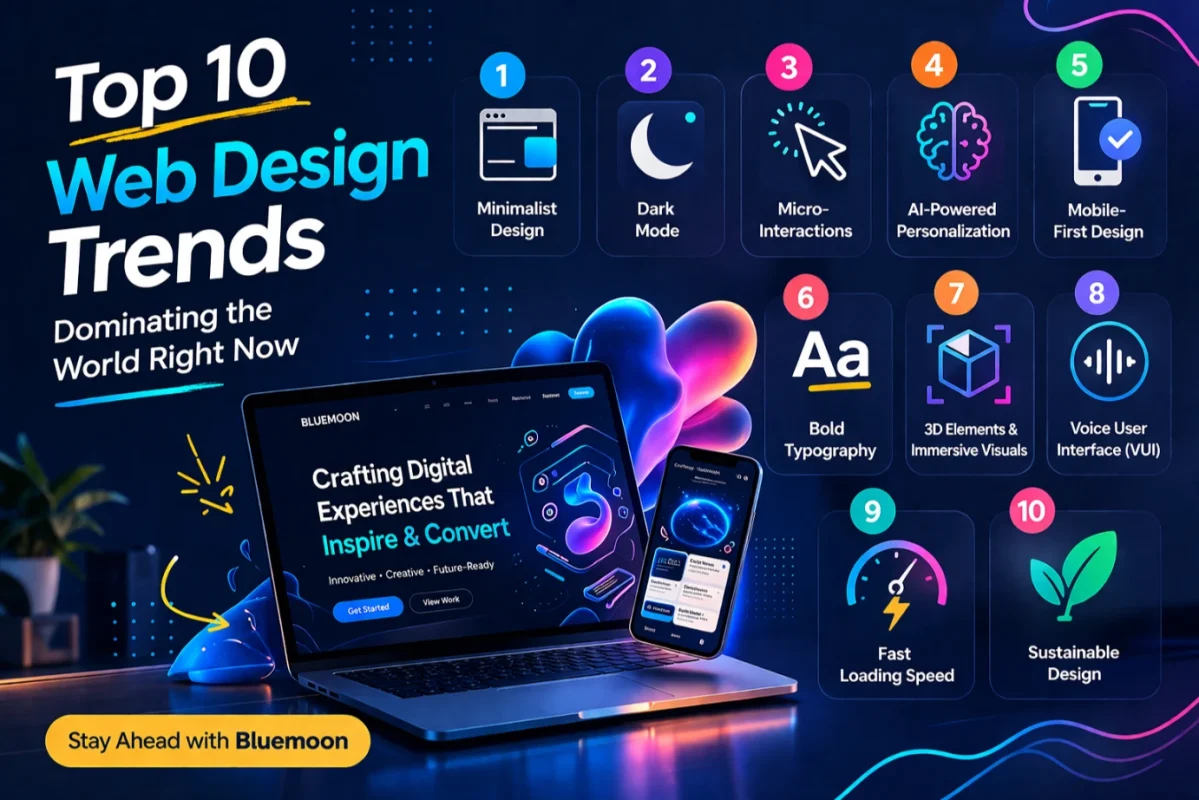
The future of responsive web design is poised to evolve with advancements in technology and user behavior. Trends such as the increased use of artificial intelligence for personalized user experiences and the growing importance of voice search are set to shape how responsive design is approached.
Additionally, as more users access the web through smart devices, designers will need to focus on creating more immersive and interactive experiences. This may include the integration of augmented reality (AR) elements and dynamic content that adjusts based on user interactions and preferences.

Bluemoon
